The best coffee beans are the fresh ones. That sounds obvious, but it is the single insight that separates a good cup from a forgettable one — and it is the one thing most “best coffee beans” articles never mention. Across 95 forum threads in the coffee community, freshness came up more than any brand name, origin, or roast level. If the bag does not have a roast date printed on it, the roaster does not want you to know when those beans were roasted. That is your first filter.
The second thing most roundups get wrong: they treat “best coffee beans” as one category. It is not. The beans that make a rich, syrupy espresso with thick crema are not the same beans that produce a bright, fruity pour-over. Medium-dark blends designed for espresso taste flat and muddy in a V60. Light single-origins designed for filter can taste sour and thin as espresso. We organized this guide around that reality — every pick includes which brew methods it actually suits, not just a generic “works for everything” claim.
We compared whole bean coffees across six roasters, three roast levels, and price points from $0.53/oz to $1.44/oz. If you already have a good grinder (and you should — the coffee community is emphatic that a grinder and fresh beans matter more than any other piece of equipment), here are the six we would buy.
How we evaluated
- Freshness and roast date transparency — Does the roaster print a roast date? How quickly does the product ship from roasting? Amazon fulfillment adds variability here, and we noted which brands handle it better than others.
- Brew method suitability — We matched each bean to the methods it genuinely performs well in, based on roast level, origin, and community feedback. No “great for any brew method” filler.
- Value per ounce — A $27 bag that weighs 35 oz is a better deal than a $15 bag that weighs 12 oz. We calculated the real per-ounce cost for every pick.
- Review depth and consistency — All six picks have over 1,600 Amazon reviews. We looked for patterns in complaints, not just star averages — freshness complaints, flavour consistency across batches, and packaging issues.
- Roast level and origin variety — We deliberately picked across light, medium, and dark roasts, and included both blends and single-origin beans. A roundup with six medium roasts helps nobody.
1. Lavazza Super Crema — The Espresso Workhorse

Lavazza Super Crema Whole Bean Coffee
Best for: Daily espresso drinkers who want a reliable, crowd-pleasing bean at a fair price
Arabica-Robusta blend engineered for thick crema and a smooth, sweet finish across espresso machines, moka pots, and drip brewers
- +Nearly 40,000 reviews with a 4.5-star average — one of the most-purchased whole bean coffees on Amazon
- +Arabica-Robusta blend produces consistently thick crema in home espresso machines
- +2.2 lb bag offers solid value at roughly $0.77/oz for a quality espresso bean
- +Medium roast is versatile enough for drip and moka pot, not just espresso
- −Contains Robusta beans — purists who insist on 100% Arabica may not appreciate the blend
- −Pre-roasted and imported from Italy — freshness depends on the batch and Amazon inventory turnover
- −Flavor profile leans commercial-Italian rather than specialty third-wave — won't satisfy light-roast enthusiasts
- −2.2 lb bags can go stale before finishing if you're a low-volume drinker
✓ Free shipping with Prime · Affiliate link
Why we recommend it
Nearly 40,000 Amazon reviews do not accumulate by accident. The Super Crema is Lavazza’s best-selling whole bean coffee because it does one thing exceptionally well: it produces thick, consistent crema in home espresso machines without demanding a specific grinder setting or precise dose. The Arabica-Robusta blend is engineered for crema — the Robusta component adds body and that signature foam that pure Arabica beans struggle to produce at home pressures.
The community’s view of Lavazza is polarized but honest. Specialty enthusiasts dismiss it. But in threads about moka pot and home espresso setups, Lavazza appears as the default recommendation — one user described their “end-game setup” as a moka pot and Lavazza beans. For Italian-style coffee, this is the benchmark.
Key features
- Arabica-Robusta blend — The Robusta beans contribute crema thickness, body, and a slightly higher caffeine content than 100% Arabica alternatives
- 2.2 lb bag — At $27 for 35.2 oz ($0.77/oz), this is competitive pricing for a quality espresso bean
- Medium espresso roast — Versatile enough for drip and moka pot, not just espresso machines
Who it’s best for
Daily espresso drinkers who want a reliable, no-fuss bean that produces good crema without requiring barista-level precision. If you make milk drinks (lattes, cappuccinos), the Super Crema’s bold body holds up well against milk.
Potential downsides
- Contains Robusta beans — 100% Arabica purists and specialty coffee drinkers will taste the difference, and not in a way they enjoy
- Pre-roasted and imported from Italy. Freshness depends entirely on Amazon inventory turnover — some reviewers report bags with roast dates months old
- The flavour profile is commercial-Italian, not specialty. If you have been drinking third-wave light roasts, this will taste like a different beverage
Affiliate link
2. Mayorga Cafe Cubano — Organic Dark Roast at a Fair Price

Mayorga Cafe Cubano Dark Roast
Best for: Dark roast fans who want organic, specialty-grade beans at a reasonable per-ounce cost
USDA Organic, specialty-grade dark roast slow-roasted in small batches with a bold, sweet, low-acidity profile
- +USDA Organic, Non-GMO, and Kosher certified — rare for a dark roast at this price point
- +Slow-roasted in small batches in Rockville, MD — not mass-produced
- +Bold and smooth with low acidity — works well for espresso and drip alike
- +Direct trade with Latin American farmers since 1997 — genuine sourcing story
- −2 lb bag at $31 is pricier than grocery-store dark roasts — value depends on whether organic matters to you
- −Dark roast masks origin character — if you want to taste terroir, look at lighter roasts
- −Cuban-style roast profile is polarizing — some find it too smoky or heavy for daily drinking
- −Robusta-adjacent intensity may overwhelm pour-over and lighter brewing methods
✓ Free shipping with Prime · Affiliate link
Why we recommend it
Finding a dark roast that is both USDA Organic and specialty-grade at under a dollar per ounce is genuinely difficult. Mayorga’s Cafe Cubano manages it at $0.97/oz — and unlike most budget dark roasts, it is slow-roasted in small batches in Rockville, Maryland, not mass-produced on an industrial line. The result is bold and sweet with low acidity, which is exactly what dark roast fans want.
Mayorga is a direct-trade company that has worked with Latin American farmers since 1997. That sourcing story is not marketing — they publish their partner farms and pricing. For buyers who care about ethical sourcing but do not want to pay $22 for 12 oz, Mayorga threads the needle.
Key features
- USDA Organic, Non-GMO, Kosher — Triple-certified, which is uncommon for dark roasts in this price range
- 2 lb bag — At $31 for 32 oz ($0.97/oz), competitive value for an organic specialty-grade bean
- Low acidity profile — Slow-roasting reduces bitterness and acidity, making this approachable for sensitive stomachs
Who it’s best for
Dark roast drinkers who want organic certification without paying specialty boutique prices. Works well in drip machines, French press, and espresso — the bold profile holds up across methods.
Potential downsides
- Dark roast by definition masks origin character — if you want to taste where the beans came from, look at medium or light roasts instead
- The Cuban-style profile is polarizing. Some drinkers find it too smoky or one-dimensional for daily use
- At $31 per bag, it is cheaper per ounce than many competitors but the upfront cost is higher than a $16 bag of Peet’s
Affiliate link
3. Stumptown Holler Mountain — Third-Wave Specialty for Everyday
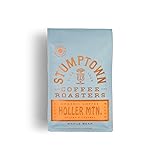
Stumptown Holler Mountain Organic Whole Bean
Best for: Specialty coffee drinkers who want third-wave quality in a versatile, everyday blend
Organic, Direct Trade medium roast with citrus and caramel notes — complex enough for espresso, approachable enough for drip
- +Genuine third-wave pedigree — Stumptown is a founding name in specialty coffee
- +Direct Trade sourcing with transparent producer relationships and higher-than-market pricing
- +Versatile profile works across espresso, drip, pour-over, and cold brew without adjustment
- +USDA Organic certified — clean sourcing with no synthetic inputs
- −12 oz bag at $15 is roughly $1.25/oz — premium pricing for a blend
- −4.3-star average suggests inconsistent batches — some reviewers report stale bags via Amazon fulfillment
- −Medium roast may feel under-developed for dark roast loyalists seeking bold, smoky flavors
- −Citrus-forward profile is an acquired taste — not the neutral, balanced cup some beginners expect
✓ Free shipping with Prime · Affiliate link
Why we recommend it
Stumptown is one of the roasters that launched the specialty coffee movement in America. Holler Mountain is their flagship blend — organic, Direct Trade, and roasted to showcase citrus and caramel notes with enough body to work in espresso. For buyers upgrading from grocery-store beans to something genuinely better, this is where many people start their specialty journey.
We should be direct about the elephant in the room: the Reddit coffee community has soured on Stumptown since its acquisition by a larger coffee conglomerate. Threads describe post-acquisition decline, with some calling their grocery-store presence “commodity grade.” The specific complaint is freshness — bags purchased at retail can be months past their roast date. The defence is equally clear: subscribers who order directly from Stumptown report bags roasted within two weeks. The freshness gap between retail and direct is real, and it matters for this bean.
Key features
- Direct Trade sourcing — Stumptown pays producers above market rates and publishes their relationships. Their Direct Trade sourcing model focuses on long-term partnerships and price transparency with growers
- USDA Organic — Clean sourcing with no synthetic inputs
- Versatile medium roast — Complex enough for espresso, balanced enough for drip and pour-over
Who it’s best for
Coffee drinkers ready to step up from commercial beans to specialty. If you have a pour-over setup or a decent espresso machine, Holler Mountain will show you what your equipment can actually produce with better beans. Order direct from Stumptown if freshness matters to you — and it should.
Potential downsides
- At $15 for 12 oz ($1.25/oz), this is premium pricing for a blend. You are paying for the Stumptown name and sourcing practices
- The 4.3-star Amazon average reflects inconsistent batch freshness through Amazon fulfillment — some buyers receive stale bags
- The post-acquisition reputation hit is real. Some specialty drinkers have moved on to smaller, independent roasters. Whether that matters depends on whether you care about industry politics or just how it tastes in the cup
Affiliate link
4. Volcanica Ethiopian Yirgacheffe — The Single-Origin Light Roast

Volcanica Ethiopian Yirgacheffe Coffee
Best for: Pour-over and filter enthusiasts who want a classic single-origin light roast with blueberry and citrus notes
Single-origin Ethiopian Yirgacheffe with medium body, bright acidity, and distinctive blueberry-citrus flavor — the benchmark light roast
- +Ethiopian Yirgacheffe is the gold standard for single-origin light roasts — this is the origin that defines floral and fruity coffee
- +USDA Organic and fresh-roasted to order — not sitting in a warehouse for months
- +Flavor complexity rewards careful brewing — blueberry, lemon, and jasmine notes emerge with proper extraction
- +Tested for mold, mycotoxins, and pesticides — transparent quality control beyond basic organic certification
- −4.2-star average reflects the polarizing nature of light roasts — many reviewers expected a darker, bolder cup
- −Light roast is less forgiving of imprecise grinding and brewing — demands a good grinder and consistent technique
- −16 oz at $23 ($1.44/oz) is premium pricing — this isn't a daily-driver bean for most budgets
- −Fruity and floral profile may taste sour or tea-like to drinkers accustomed to medium or dark roasts
✓ Free shipping with Prime · Affiliate link
Why we recommend it
Ethiopian Yirgacheffe is where many coffee enthusiasts fall in love with single-origin light roasts. The flavour profile — blueberry, lemon, jasmine — is unlike anything you will find in a medium or dark roast blend. It is the origin that defines what “fruity coffee” can be when roasted carefully.
Volcanica roasts to order rather than pre-roasting and warehousing, which addresses the freshness concern that dominates community discussion. They also test for mold and mycotoxins, which goes beyond basic organic certification. At $1.44/oz, this is the most expensive pick in our lineup — but for pour-over and filter enthusiasts, the flavour complexity justifies the premium.
The coffee community’s love for Ethiopian beans is well-documented. While Volcanica specifically does not appear in Reddit’s enthusiast discourse (the community trends toward smaller roasters and local shops), Ethiopian Yirgacheffe as an origin is the gold standard for light-roast filter coffee. This is a reliable, widely-available expression of that origin.
Key features
- Single-origin Yirgacheffe — Sourced from one of the most celebrated coffee-growing regions in the world, the birthplace of Arabica coffee
- Roasted to order — Ships within days of roasting, solving the freshness problem that plagues most Amazon bean listings
- USDA Organic, Kosher, screened for mold and mycotoxins — Transparent quality control beyond basic certification
Who it’s best for
Pour-over and filter enthusiasts who want to explore what single-origin coffee actually tastes like. If you own a V60, Chemex, or Kalita Wave, this bean will reward careful brewing with flavour complexity you will not find in blends. Pair it with a good burr grinder — light roasts are less forgiving of blade grinders and inconsistent grinds.
Potential downsides
- The 4.2-star average reflects the polarizing nature of light roasts — many negative reviews come from buyers who expected a bold, dark cup and received something tea-like and fruity instead
- Light roasts demand precision: water temperature, grind size, and brew ratio all matter more than with darker beans. This is not a forgiving bean for imprecise setups
- At $23 for 16 oz, this is not a daily driver for most budgets. Treat it as your weekend pour-over bean, not your Monday morning auto-drip filler
Affiliate link
5. Cameron’s Breakfast Blend — The Low-Risk Starting Point
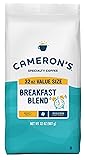
Cameron's Coffee Breakfast Blend Whole Bean
Best for: New whole-bean buyers who want a smooth, mild daily coffee without the learning curve
Light roast using top 10% Arabica beans, specifically roasted to be smooth and never bitter — a no-risk entry point for whole bean coffee
- +32 oz bag at $17 is roughly $0.53/oz — one of the best per-ounce values in whole bean coffee
- +Deliberately mild and smooth — Cameron's entire brand promise is 'never bitter,' which works for beginners
- +Light roast preserves a mild sweetness without the acidity or intensity that turns new drinkers off
- +Large bag is practical for daily drip or automatic machine use without constant reordering
- −Mild flavor profile means experienced coffee drinkers may find it flat or one-dimensional
- −Not well-suited for espresso — the light roast and mild character produce a thin, underwhelming shot
- −Lacks specialty certifications (no organic, no fair trade) despite 'sustainably sourced' branding
- −32 oz bag may go stale before finishing for lighter drinkers — no one-way valve mentioned
✓ Free shipping with Prime · Affiliate link
Why we recommend it
Not everyone buying “best coffee beans” is looking for tasting notes and origin stories. Some people just switched from pre-ground to whole bean and want something smooth that will not punish them for not owning a $200 grinder. Cameron’s Breakfast Blend exists for that buyer.
At $0.53/oz (32 oz for $17), this is the best per-ounce value in our lineup by a wide margin. Cameron’s entire brand promise is “smooth, never bitter” — they achieve this by light-roasting the top 10% of Arabica beans they source, which preserves sweetness without the acidity or intensity that turns new whole-bean drinkers off.
The Reddit coffee community does not discuss Cameron’s — it occupies the same tier as Trader Joe’s and Aldi in the community’s “good enough for people who are not obsessed” category. For our purposes, that is exactly the point. If you are reading a “best coffee beans” article for the first time, you do not need $23 Ethiopian Yirgacheffe. You need something approachable that proves whole bean coffee is worth the extra step of grinding.
Key features
- 32 oz bag — Two full pounds means less frequent reordering for daily drinkers
- Light roast, smooth profile — Deliberately mild and sweet, avoiding the bitterness that drives people away from coffee
- Top 10% Arabica beans — Cameron’s is selective about sourcing, even at this price point
Who it’s best for
First-time whole bean buyers, office coffee setups, and anyone who drinks 2+ cups a day from an automatic drip machine and wants better-than-Folgers without a learning curve. Not for espresso — the light roast and mild character produce a thin, underwhelming shot.
Potential downsides
- Experienced coffee drinkers will find the flavour flat and one-dimensional. This is entry-level by design
- No specialty certifications (organic, fair trade, etc.) despite “sustainably sourced” branding — the sourcing story is thin
- The 32 oz bag can go stale before lighter drinkers finish it. Consider transferring half to a sealed container and freezing it
Affiliate link
6. Peet’s Major Dickason’s Blend — The Dark Roast That Does Everything

Peet's Coffee Major Dickason's Blend
Best for: Dark roast lovers who want a rich, full-bodied bean that performs well across every brewing method
Peet's flagship dark roast — robust, complex, and full-bodied — designed for espresso, drip, French press, and pour-over
- +Peet's most iconic blend — over 50 years of refinement by the company that pioneered American dark roasting
- +Works genuinely well across espresso, drip, French press, and pour-over — true all-rounder
- +18 oz at $16 ($0.89/oz) is competitive pricing for a premium heritage brand
- +100% Arabica with a complex, layered profile — more nuance than typical grocery-store dark roasts
- −Dark roast intensity is polarizing — light and medium roast fans will find it too smoky and heavy
- −Named after a real person (Major Dickason) but the blend recipe has evolved — purists debate whether it matches the original
- −Pre-ground options outsell whole bean by a wide margin — many reviewers compare it to the ground version, which confuses bean-specific reviews
- −Ethical sourcing claims are general ('positive impact') without specific certifications like Fair Trade or organic
✓ Free shipping with Prime · Affiliate link
Why we recommend it
Peet’s Coffee has been roasting for over 50 years. Major Dickason’s Blend — their most iconic creation, named after a loyal customer — has been in continuous production for decades and remains their flagship. That kind of longevity is not an accident. This is the dark roast that most American dark-roast drinkers have in their mental model when they think “good dark coffee.”
The community positions Peet’s as the step up from Folgers and Starbucks — a recommendation for people leaving bad coffee behind. “Get some Peet’s or something in that range at least” was one of the most-upvoted pieces of advice in a thread about a Folgers drinker entering the specialty world. That is exactly where this bean sits: above mass-market, below boutique, and genuinely good across every brewing method.
Key features
- True all-rounder — Peet’s specifically recommends this for espresso, drip, French press, and pour-over, with grind-size guidance for each. We have seen few beans marketed this broadly that actually deliver across methods
- 18 oz at $16 — At $0.89/oz, this is mid-range pricing with heritage-brand quality
- 100% Arabica, complex dark roast — More nuance than grocery-store dark roasts, with layers rather than pure char
Who it’s best for
Dark roast drinkers who use multiple brewing methods and do not want to buy separate beans for each. If you alternate between a French press on weekends and a drip maker during the week, Major Dickason’s works equally well in both without adjustment.
Potential downsides
- Dark roast intensity is polarizing — if you prefer light or medium roasts, this will taste too heavy and smoky for daily use
- The “Major Dickason’s” recipe has evolved over decades. Long-time fans occasionally note the flavour has shifted, though this is hard to verify
- No organic or Fair Trade certification. Peet’s talks about “sourcing with impact” but does not carry third-party verification at this price point
Affiliate link
Buyer’s guide: what the community actually argues about
Most buyer’s guides list “things to consider” that sound helpful but are too generic to act on. We built this one from what real coffee drinkers argue about in forums — the questions that generate hundreds of comments and genuinely divide opinion.
Freshness is the one rule that matters more than everything else
The single most discussed topic across 95 forum threads was not brand, origin, or roast level. It was freshness. The community consensus is specific: use beans within 2–4 weeks of their roast date. For espresso, let fresh beans rest 7–14 days after roasting — too-fresh beans release excessive CO2, producing sour shots with unstable crema.
If the bag does not have a roast date, do not buy it. A “best by” date is not the same thing — it tells you when the beans expire, not when they were roasted, and the gap between the two can be months. This is the primary complaint against buying beans at grocery stores: bags labelled with roast dates months in the past.
For the picks in this guide, freshness varies: Volcanica roasts to order. Cameron’s and Lavazza ship from warehouse stock. Stumptown’s freshness depends on whether you buy retail or subscribe direct. Factor this into your choice.
Match your beans to your brew method — they are not interchangeable
The community is emphatic: espresso beans and filter beans are different purchases. Medium-dark blends (like the Lavazza Super Crema or Peet’s Major Dickason’s) produce body, crema, and the bold flavour that holds up in milk drinks. Light single-origins (like the Volcanica Ethiopian Yirgacheffe) produce clarity, brightness, and fruit-forward flavours that shine in pour-over and filter brewing.
Using the wrong bean for your method is the most common mistake new whole-bean buyers make. A light Ethiopian in an espresso machine at home pressures often tastes sour and thin. A dark Italian roast in a V60 tastes muddy and flat. The Specialty Coffee Association defines brewing standards for extraction percentage and total dissolved solids — but the practical version is simpler: darker beans for pressure and milk, lighter beans for gravity and black.
If you only want to buy one bag, a medium roast blend (like the Stumptown Holler Mountain) is the safest all-rounder. It will not be the best espresso bean or the best pour-over bean, but it will be acceptable in both.
Single-origin vs. blend: when each makes sense
Blends are engineered for consistency. A roaster designing a blend can adjust the ratio of origins to maintain the same flavour profile year-round, even as individual harvests change. This is why blends dominate the espresso world — baristas need a bean that tastes the same on Monday and Friday.
Single-origins are about exploration. An Ethiopian Yirgacheffe tastes different from a Colombian Huila, which tastes different from a Kenyan AA. If you want to understand what coffee from a specific place tastes like, single-origin is the only way. But single-origins also vary by harvest and lot — the exact bag of Volcanica Yirgacheffe you buy this month may taste slightly different from the one you buy in three months.
For daily drinking, most people are better served by a blend they like. For weekend pour-over sessions where you want to pay attention to what you are tasting, single-origin rewards the effort.
Storage: simpler than the internet makes it sound
The community’s top-voted storage advice is disarmingly simple: keep the beans in the bag they came in. Most specialty bags have a one-way valve that lets CO2 out without letting air in. Use the beans within 2–4 weeks and you do not need special equipment.
For bulk buying or longer storage, the consensus is to freeze beans in airtight, single-dose portions. Let them thaw fully to room temperature before opening the container — condensation from opening a cold bag accelerates staling. Vacuum canisters (like the Fellow Atmos or Airscape) are popular for beans in active rotation, but they are not necessary if you are going through a bag every two weeks.
The co-ferment question: a live controversy worth knowing about
A growing number of specialty coffees are labelled with exotic flavour notes — passionfruit, cinnamon, strawberry — achieved through co-fermentation, a processing method where coffee cherries are fermented alongside fruits or other flavour agents. The community is deeply divided on whether this constitutes natural flavour development or artificial flavouring.
The concern is transparency. Some producers have been found using flavour additives rather than genuine co-fermentation. “A lot of these roasters operated on trust with producers” was how one roaster described the situation. For buyers, the practical advice is: if a coffee’s flavour notes sound too specific or too vivid (think “birthday cake” or “mango Skittles”), ask how those flavours were achieved. Traditional processing methods — washed, natural, honey — produce recognisable flavour profiles without additives. None of the six beans in this guide use co-fermentation.
What to spend: realistic expectations
Specialty whole bean coffee costs $14–$20 per 12 oz bag from online roasters. Grocery-store options (Peet’s, Stumptown on the shelf, Trader Joe’s) run $8–$16 depending on the brand and bag size. Premium single-origins and exotic lots can reach $25+ for 12 oz.
For this guide, our per-ounce costs range from $0.53/oz (Cameron’s) to $1.44/oz (Volcanica). The National Coffee Association recommends roughly 2 tablespoons (10g) per 6 oz cup. At that ratio, even the most expensive bean in our lineup costs about $0.50 per cup — still far cheaper than any coffee shop. The cheapest costs about $0.19 per cup.
If you are just switching from pre-ground, start with a $15–$20 bag and see if you notice the difference. And if you have tried whole bean and decided grinding is not for you, our best ground coffee guide covers the pre-ground options worth buying.
Community favourites we did not include (and why they are worth exploring)
Our picks prioritize wide availability on Amazon, verified review depth, and roast-level variety. But the online coffee community recommends a different set of names — smaller roasters that do not have the Amazon presence or review volume to make a mass-market roundup, but that consistently earn praise from experienced home baristas. If you want to go deeper, these are the names that come up most often in forum discussions:
- Nicoletti — Fresh-roasted to order on Amazon at competitive prices. One of the few community-endorsed roasters that is also easy to buy online.
- Black and White Coffee Roasters — Their classic blend is a favourite for espresso and milk drinks. Their co-fermented offerings are more divisive.
- H&S Coffee Roasters (Laramie, Wyoming) — An ultra-light roast specialist with a cult following among pour-over enthusiasts.
- Counter Culture — A larger roaster that still earns community respect for consistency, particularly their Ethiopian offerings.
The best advice from the community is simpler than any product list: find a local roaster who prints a roast date on the bag, buy a bag, and see if you like it. If you do not have a good local option, the six picks above and the names on this list are a reliable starting point.