Espresso does not forgive. A drip brewer will smooth over stale beans, inconsistent grind, and imprecise dosing. An espresso machine at 9 bars of pressure will expose every one of those problems in a 25-second shot. The beans you put into the hopper matter more for espresso than for any other brewing method — and most “best espresso beans” articles treat them exactly like drip coffee beans with a different label on the bag.
Here is the thing the espresso community says more than anything else about bean selection: “espresso roast” is a marketing label, not a quality indicator. One of the most-upvoted comments we found across the espresso forums put it bluntly: you do not need “espresso roast” to make espresso, and the label is often used to disguise inferior beans. What actually matters is freshness, roast level, density, and how the bean behaves under 9 bars of pressure.
We compared whole bean coffees from six brands that are purpose-built for or proven in espresso. Three of our picks have strong community backing from home baristas who pull daily shots. Three are Amazon-popular with strong review profiles but less enthusiast-community discussion — we will be transparent about which is which. If you already have a good espresso grinder (and you should — the grinder matters at least as much as the beans), here are the six we would put in our hopper.
How we evaluated
- Zero overlap with our general beans guide — If you are looking for Lavazza Super Crema, Stumptown, or Volcanica, those are in our best coffee beans guide, which covers all brew methods. This guide starts from scratch with espresso-specific criteria. Different demands, different lineup
- Espresso performance, not multi-purpose marketing — Every pick was assessed specifically for how it behaves under pressure: crema production, dial-in difficulty, body, and how it handles milk. We did not include beans just because they say “espresso” on the bag.
- Freshness infrastructure — How does the roaster handle the freshness problem? Pressurized tins, roast-to-order, warehouse stock? Espresso beans need to be 7–21 days post-roast for best results. How the bean gets to you determines where in that window you land.
- Per-shot value — Espresso uses roughly 18g per double shot. We calculated the real cost per double shot for every pick, not just the bag price.
- Review depth and espresso-specific complaints — We looked for patterns in complaints that affect espresso specifically: oily beans clogging grinders, stale beans producing no crema, roast-level mislabeling, and grind inconsistency.
- Community signal — Three of our picks (illy, Intelligentsia, Nicoletti) appear in Reddit espresso discussions with real opinions from home baristas. Three (Kicking Horse, Death Wish, Gaviña) are Amazon-popular with limited forum discussion — solid products, but community-validated they are not. We note the difference for each.
1. illy Classico — The Espresso Standard

illy Classico Whole Bean Coffee
Best for: Home baristas who want a consistently excellent espresso without chasing roast dates or dialing in endlessly
Pressurized-tin packaging preserves freshness far longer than standard bags, making it the most shelf-stable quality espresso bean available
- +Eight decades of espresso blending expertise — illy's single-blend philosophy means every can tastes the same
- +Pressurized tin packaging extends freshness well beyond standard foil bags
- +100% Arabica from 9+ origins produces a balanced, sweet shot with caramel and floral notes
- +B Corp certified — one of the few major espresso brands with third-party sustainability verification
- −8.8 oz can at $14.99 makes this $1.70/oz — the most expensive per-ounce in our lineup
- −100% Arabica means thinner crema compared to Arabica-Robusta blends like Nicoletti or Death Wish
- −Medium roast profile leans mild for those who want intense, dark Italian espresso
- −Subscribe & Save heavily promoted on Amazon — S&S orders pay zero affiliate commission
✓ Free shipping with Prime · Affiliate link
Why we recommend it
illy has spent eight decades doing one thing: blending a single espresso recipe from Arabica beans sourced from nine-plus origins, and roasting it the same way every time. The Classico is their signature — a medium roast with caramel and floral notes that produces a clean, sweet shot with a thin but stable crema.
The espresso community’s view of illy is polarizing but instructive. Forum threads regularly dismiss illy as a beginner’s bean — one highly upvoted comment compared using illy in a high-end machine to putting bad fuel in a luxury car. The criticism is real, and it is also partly the point: illy is designed for consistency and accessibility, not for chasing exotic tasting notes. If you want a bean that tastes the same every Monday morning regardless of batch, illy delivers that better than any other brand on this list.
The pressurized tin packaging is illy’s genuine differentiator. Standard foil bags let in air from the moment you open them. illy’s sealed tin preserves the beans under inert gas, which means a can that has been on an Amazon shelf for weeks still tastes closer to fresh than a bag of specialty beans with a roast date from the same timeframe. For espresso drinkers who buy in bulk or do not pull shots every day, that matters.
Key features
- 100% Arabica from 9+ origins — Blended for balance and consistency, not single-origin complexity
- Pressurized tin packaging — Inert gas preserves freshness longer than standard one-way-valve bags
- B Corp certified — One of the few major espresso brands with verified sustainability practices
Who it is best for
Espresso drinkers who want a reliable, no-surprise bean that works on any machine from a Bambino to a Rancilio. If you make espresso daily but do not want to spend time dialing in new beans every two weeks, illy is the safe choice. At $1.08 per double shot (18g dose from a 250g can at $14.99), the per-shot cost is higher than the large-bag picks — but you are paying for consistency and freshness infrastructure, not just beans.
Potential downsides
- At $1.70/oz, this is the most expensive per-ounce bean in our lineup — the 8.8 oz can makes the bag price look low but the per-ounce cost is premium
- 100% Arabica produces thinner crema than Arabica-Robusta blends. If thick crema is your priority, Nicoletti or Death Wish will deliver more
- The espresso community does not consider illy a serious bean — it is accessible, not aspirational. That gap is real, and it matters if you are progressing toward specialty espresso
- Medium roast may be too mild for drinkers who want dark, intense Italian-style espresso
Affiliate link
2. Gaviña Old Havana Espresso — Latin Espresso at a Fair Price

Gaviña Old Havana Espresso Whole Bean Coffee
Best for: Espresso drinkers who want a traditional Latin-style cup with body and sweetness at a fair per-ounce price
Cuban-inspired medium-dark espresso blend from a 140-year-old family roaster, roasted in a zero-waste facility in Los Angeles
- +Best value in our lineup at $0.91/oz for 32 oz of quality espresso beans
- +100% Arabica with a nutty, sweet profile and low acidity — approachable for sensitive stomachs
- +Family-owned roaster with 140+ years of Latin coffee expertise and Direct Impact sourcing
- +Roasted and packed at a zero-waste-to-landfill facility in Los Angeles
- −Cuban-style profile may be too smooth and one-dimensional for drinkers who want bright, complex espresso
- −Not widely discussed in the specialty coffee community — this is a value play, not a connoisseur pick
- −32 oz bag can go stale before finishing unless you freeze half — no roast date printed on bag
- −Subscribe & Save heavily promoted — S&S orders pay zero affiliate commission
✓ Free shipping with Prime · Affiliate link
Why we recommend it
Finding a quality espresso bean under a dollar per ounce is genuinely difficult. Gaviña’s Old Havana manages it at $0.91/oz for a 32 oz bag — and unlike most budget espresso options, it comes from a family-owned roaster with over 140 years of Latin coffee heritage, not a mass-market production line.
We should be transparent: Gaviña does not appear in Reddit espresso discussions. This is an Amazon-popular product with 1,266 reviews and a 4.5-star average, but it lacks the community validation that our top picks have. What it does have is a genuine heritage story (Café Gaviña has been roasting for over 140 years), a Cuban-inspired espresso profile that prioritizes nutty sweetness and low acidity, and a zero-waste-to-landfill roasting facility in Los Angeles. For daily espresso drinkers who go through beans quickly and need value, this is the pick we would recommend.
Key features
- 32 oz bag — Two full pounds means fewer reorders for daily espresso drinkers pulling 2–3 shots
- 100% Arabica, medium-dark roast — Nutty, sweet, low acidity — the Cuban-style espresso profile that works in straight shots and cortados
- Direct Impact sourcing — Gaviña publishes their ethical sourcing practices and runs a zero-waste facility
Who it is best for
Daily espresso drinkers who want a solid bean at the best per-shot cost in our lineup. At $0.58 per double shot (18g dose from a 907g bag at $28.99), this is nearly half the per-shot cost of illy. Works well in milk drinks where the nutty sweetness complements steamed milk. Not for drinkers who want bright, complex shots — this is comfort-espresso, not adventure-espresso.
Potential downsides
- Cuban-style profile may feel one-dimensional to drinkers who want bright, fruity, or complex espresso
- No roast date printed on the bag — freshness depends entirely on Amazon inventory turnover
- Not discussed in the espresso community — this is an Amazon-validated pick, not a community-endorsed one
- 32 oz bag can go stale before finishing unless you freeze half in airtight portions
Affiliate link
3. Intelligentsia Black Cat Classic Espresso — The Third-Wave Pick

Intelligentsia Black Cat Classic Espresso
Best for: Experienced home baristas who want a third-wave espresso that rewards precise dialing in
Seasonally rotating Direct Trade blend designed specifically for espresso — components change throughout the year while the sweet, balanced profile stays consistent
- +Designed from the ground up as an espresso blend — not a multi-purpose coffee with 'espresso' on the label
- +Direct Trade sourcing with published grower relationships and above-market pricing
- +Seasonally rotating components keep the blend interesting while maintaining a consistent flavor profile
- +Light roast produces syrupy sweetness and fruit complexity that dark roasts cannot achieve
- −Light roast espresso is demanding — requires precise grind, temperature, and dose to avoid sourness
- −4.0-star Amazon average reflects that many buyers expected dark, bold espresso and got something fruit-forward instead
- −At $1.25/oz this is premium pricing for a 12 oz bag — similar per-ounce to Kicking Horse but in a smaller package
- −Post-acquisition reputation hit — some specialty enthusiasts have moved on to smaller roasters
✓ Free shipping with Prime · Affiliate link
Why we recommend it
If every other bean on this list is designed to make espresso easy, the Black Cat Classic is designed to make espresso interesting. This is a light-roast espresso blend from one of the roasters that defined third-wave coffee in America — Direct Trade sourced, seasonally rotating, and built for baristas who want to taste something in their shot besides “dark and bold.”
The flavor profile is syrupy sweet with fruit complexity — not what most people expect from an “espresso blend.” That is intentional. Intelligentsia designed the Black Cat as a showcase for what espresso can taste like when the beans are sourced well and roasted carefully. The seasonally rotating components mean the blend changes throughout the year as new harvests arrive, but the overall sweet, balanced profile stays consistent. You are paying for the sourcing and the craft, not just the roast.
The community’s view of Intelligentsia is mixed. Like Stumptown, Intelligentsia has been grouped with roasters that “sold out” after acquisition. But the Black Cat Classic has a separate identity — it has been their flagship espresso blend since the beginning, and the Direct Trade program remains intact. The 4.0-star Amazon average reflects a different issue: many buyers expected dark, bold espresso and received something fruit-forward. That expectation mismatch is not a quality problem.
Key features
- Designed for espresso — Not a multi-purpose coffee with “espresso” on the label. Brewing ratio, grind guidance, and roast level are all calibrated for 9-bar extraction
- Direct Trade sourcing — Published grower relationships with above-market pricing
- Seasonally rotating — Components change through the year while the overall profile stays consistent
Who it is best for
Experienced home baristas who want to explore what espresso can taste like beyond the traditional Italian profile. If you own a machine that gives you temperature control and a grinder that can handle light-roast espresso (light beans are denser and need finer grinding), the Black Cat will reward precise dialing in with shots that taste like nothing else on this list. At $0.79 per double shot, the per-shot cost is moderate.
Potential downsides
- Light-roast espresso is demanding. Requires precise grind, higher temperature (93–95°C), and careful dose. Beginners will get sour, thin shots
- The 4.0-star Amazon average is the lowest in our lineup — driven by buyers who expected dark espresso and got fruit-forward specialty. Read the description before buying
- At $1.25/oz for a 12 oz bag, the per-ounce cost is the same as Kicking Horse’s 35 oz bag — you are paying a premium for a small bag
- Post-acquisition brand reputation is mixed in the specialty community, though the Black Cat blend itself retains respect
Affiliate link
4. Kicking Horse Cliff Hanger Espresso — The All-Rounder

Kicking Horse Cliff Hanger Espresso
Best for: Espresso drinkers who also make milk drinks and want one bag that handles both black shots and lattes
Certified Organic and Fair Trade medium roast with wild berry and cocoa notes — works as straight espresso, in milk drinks, and even as drip
- +Triple-certified: Organic, Fair Trade, and Kosher — strongest ethical sourcing story in our lineup
- +Medium roast is genuinely versatile — produces good espresso, excellent lattes, and drinkable drip coffee
- +2.2 lb bag at $1.25/oz offers good value for a certified organic bean
- +Roasted in the Canadian Rockies with no additives, preservatives, or fillers
- −$43.99 upfront cost is the highest sticker price in our lineup despite reasonable per-ounce value
- −100% Arabica medium roast produces lighter crema than Arabica-Robusta blends — not for crema chasers
- −Versatility comes at the cost of specialization — this is good espresso, not extraordinary espresso
- −Canadian-roasted and shipped from Amazon warehouses — roast date freshness varies by batch
✓ Free shipping with Prime · Affiliate link
Why we recommend it
If you make espresso in the morning and drip coffee in the afternoon, buying two bags of beans is expensive and inconvenient. Kicking Horse’s Cliff Hanger Espresso is the strongest all-rounder in our lineup — a medium-roast organic blend that produces a balanced espresso shot, integrates well into milk drinks, and does not embarrass itself in a drip brewer.
The certification set (Organic, Fair Trade, Kosher, Shade Grown) is the strongest ethical-sourcing story in our lineup. Kicking Horse roasts in the Canadian Rockies with no additives, preservatives, or fillers — the bag contains coffee and nothing else. For buyers who care about what is behind the beans, not just what is in them, this is the pick.
We should note: Kicking Horse does not appear in Reddit espresso discussions. Their “Cliff Hanger Espresso” branding is Amazon-facing, and the espresso community does not use them as a reference bean. This is an Amazon-validated product with 2,873 reviews and a 4.4-star average — solid, but positioned as “versatile” rather than “espresso specialist.” We recommend it for that reason.
Key features
- Certified Organic, Fair Trade, Kosher — Strongest ethical certification set in our lineup
- 2.2 lb bag at $1.25/oz — Good per-ounce value for a certified organic bean
- Medium roast — Wild berry and cocoa notes that work across espresso, milk drinks, and drip
Who it is best for
Espresso drinkers who also use other brewing methods and want one bag that handles everything reasonably well. At $0.79 per double shot (18g from a 998g bag at $43.99), the per-shot cost is competitive despite the higher sticker price. The upfront $43.99 is the highest in our lineup, but the 2.2 lb bag lasts — roughly 55 double shots.
Potential downsides
- $43.99 upfront cost is the highest sticker price in our lineup, even though per-ounce value is competitive
- 100% Arabica medium roast produces lighter crema than the Arabica-Robusta blends in our lineup (Nicoletti, Death Wish)
- Versatility comes at the cost of specialization — this makes good espresso, not extraordinary espresso. Dedicated espresso beans will outperform it
- Not discussed in espresso communities — Amazon-popular, not community-endorsed
Affiliate link
5. Nicoletti Original Espresso — The Community Sleeper

Nicoletti Original Espresso Roast Beans
Best for: Home baristas who want fresh-roasted espresso delivered to their door without subscribing to a specialty roaster
Roasted to order in Brooklyn since 1972 — ships within 24 hours of roasting with a date stamp on every bag
- +Fresh-roasted to order with a date stamp — solves the #1 espresso bean problem (stale beans from warehouse stock)
- +Highest-rated bean in our lineup at 4.6 stars — 538 reviews from buyers who know what fresh espresso tastes like
- +70% Arabica / 30% Robusta blend is purpose-built for crema production on home espresso machines
- +Light espresso roast preserves sweetness without the harsh, burnt taste of over-roasted commercial beans
- −At $1.11/oz this is premium pricing — you are paying for the fresh-roast guarantee
- −Bags are taped shut rather than heat-sealed due to degassing from fresh beans — packaging feels less polished
- −538 reviews vs. thousands for illy or Kicking Horse — less crowd-validated but the reviews that exist are glowing
- −Light espresso roast is unfamiliar territory for drinkers used to dark Italian blends
✓ Free shipping with Prime · Affiliate link
Why we recommend it
Nicoletti is a family-owned roaster that has been making espresso in Brooklyn since 1972. They roast to order — when you place an Amazon order, they roast and pack your beans within 24 hours, stamp the date on the bag, and ship. This solves the single biggest problem with buying espresso beans online: freshness.
The community signal on Nicoletti is small but unanimously positive. One of the most-upvoted bean recommendations we found across espresso forums was simply: try Nicoletti, they fresh-roast on Amazon, and the beans are excellent. A recent thread showed a user switching from Lavazza to Nicoletti and immediately noticing the lighter roast required finer grinding and hotter water — the community confirmed this and helped them dial in. That kind of specific, actionable discussion is the mark of a bean that serious home baristas actually use.
The 70% Arabica / 30% Robusta blend is purpose-built for espresso crema. Most specialty roasters use 100% Arabica, which produces cleaner but thinner crema. Nicoletti’s Robusta component adds the thick, golden crema that many home baristas chase — but at a light roast level, which preserves sweetness without the harsh, burnt taste of over-roasted commercial blends. This is the combination that earns our Editor’s Pick: fresh-roasted Arabica-Robusta from a half-century-old Brooklyn roaster, shipped to your door in days rather than weeks.
Key features
- Roasted to order — Ships within 24 hours of roasting with a date stamp on every bag. The freshest beans you will get from Amazon
- 70% Arabica / 30% Robusta — Engineered for thick crema production on home espresso machines
- Light espresso roast — Preserves sweetness and avoids the bitter, ashy taste of over-roasted commercial beans
Who it is best for
Home baristas who prioritize freshness above all else and want an espresso bean with genuine crema from a roaster who cares about the craft. At $0.70 per double shot (18g from a 998g bag at $38.95), the per-shot cost is excellent for a roast-to-order product. The 4.6-star rating — the highest in our lineup — reflects buyers who know what fresh espresso tastes like.
Potential downsides
- Bags are taped shut rather than heat-sealed. Because the beans are so fresh, degassing would expand sealed bags during shipping — the unsealed packaging is by design, but it looks less polished than commercial brands
- 538 reviews is fewer than established brands like illy (4,142) or Kicking Horse (2,873). The review base is smaller because Nicoletti is an artisan roaster, not a mass-market brand
- Light espresso roast is unfamiliar territory for drinkers used to dark Italian blends — expect brighter, sweeter shots rather than the dark, heavy profile many associate with espresso
- At $1.11/oz, this is premium pricing. You are paying for the roast-to-order guarantee
Affiliate link
6. Death Wish Coffee Espresso Roast — Bold Without the Learning Curve
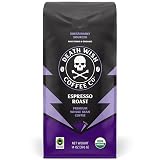
Death Wish Coffee Espresso Roast Whole Bean
Best for: Beginners and bold-espresso fans who want a forgiving, full-bodied bean that produces thick crema on any machine
USDA Organic and Fair Trade Arabica-Robusta blend with approximately 190mg caffeine per 6oz cup — bold and smooth without bitterness
- +USDA Organic and Fair Trade certified — two of the most recognized third-party ethical sourcing labels
- +Arabica-Robusta blend produces thick crema easily even on entry-level espresso machines
- +Bold, smooth flavor with baker's chocolate and caramelized sugar notes — no bitterness despite the intensity
- +14 oz bag at $1.25/oz is competitive pricing for an organic certified espresso bean
- −~190mg caffeine per 6oz cup is nearly double a standard espresso — not for caffeine-sensitive drinkers
- −887 reviews is fewer than established espresso brands like illy (4,142) or Kicking Horse (2,873)
- −The 'world's strongest coffee' branding may put off specialty enthusiasts despite the bean quality being solid
- −Robusta component adds body and crema but sacrifices the flavor complexity of 100% Arabica beans
✓ Free shipping with Prime · Affiliate link
Why we recommend it
Death Wish built their reputation on caffeine — their original blend is marketed as the “world’s strongest coffee.” The Espresso Roast channels that intensity into a format designed for 9-bar extraction: an Arabica-Robusta blend that produces thick crema, bold chocolate-and-cherry flavor, and roughly 190mg of caffeine per 6 oz serving. For a beginner pulling their first espresso shots, this is forgiving in ways that light-roast specialty beans are not.
The Arabica-Robusta composition does two things that matter for new espresso drinkers. First, Robusta beans are denser and produce more crema — you will see results even with imperfect puck prep. Second, the dark roast and heavy body hold up well in milk drinks, which is where most home baristas start. A latte made with Death Wish tastes like a latte from a café. A latte made with a light-roast single-origin can taste sour and thin if the shot is not dialed in precisely.
We should note: Death Wish is not discussed in Reddit espresso communities. Their reputation lives in the general coffee world, not the home-barista world. This is an Amazon-popular product (887 reviews, 4.4 stars) with USDA Organic and Fair Trade certifications — solid credentials, but not community-validated for espresso specifically. We recommend it for beginners because the bean itself is forgiving and the certifications are real.
Key features
- USDA Organic and Fair Trade — Certified ethical sourcing with two of the most recognized third-party labels
- Arabica-Robusta blend — Thick crema production that is forgiving on entry-level machines and imperfect puck prep
- ~190mg caffeine per 6 oz cup — Significantly higher than standard espresso. One double shot will wake you up
Who it is best for
New espresso machine owners who want a bean that produces visible crema and bold flavor without requiring barista-level dialing in. At $0.79 per double shot (18g from a 397g bag at $17.48), the per-shot cost is moderate and the bag size is manageable — you will finish it before it goes stale. If you are graduating from pods or pre-ground and want to see what your machine can do with real beans, this is where to start.
Potential downsides
- ~190mg caffeine per 6 oz cup is nearly double standard espresso. Caffeine-sensitive drinkers should dose carefully
- The “world’s strongest coffee” branding may put off specialty enthusiasts, but the bean quality is genuinely solid underneath the marketing
- 887 reviews is fewer than the established brands in our lineup — newer espresso-specific SKU from an established brand
- Robusta component adds body and crema but sacrifices the flavor complexity of 100% Arabica beans. This trades nuance for boldness
Affiliate link
Buyer’s guide: what espresso drinkers actually argue about
Most “best espresso beans” buyer’s guides copy the same advice from general coffee articles. We built this one from what home baristas who pull daily shots actually debate — the questions that generate hundreds of comments and genuinely divide opinion in espresso forums. If you are using a Breville machine with an integrated grinder, see our best espresso beans for Breville guide — the grinder and basket system on Breville machines create specific bean requirements that this general guide does not address.
”Espresso roast” is a marketing label — here is what actually matters
The single most important thing we learned from forum research — across the 772 Reddit threads in our Coffee Community Census — is that the espresso community does not trust the “espresso roast” label. A highly upvoted comment in a popular thread stated that espresso roast is often used to disguise inferior beans. What actually makes a bean suitable for espresso is not what is printed on the bag — it is the roast level, the freshness, the density, and whether the bean can produce body and crema under 9 bars of pressure.
Any bean can be used for espresso. Medium roasts often produce better espresso than dark “espresso roast” beans. The Specialty Coffee Association defines standards for extraction and brewing — but the practical reality is that espresso demands more from the bean than any other method, and the beans that handle it well share specific characteristics: moderate oil content (not oily-slick), moderate density (too porous and they crumble under pressure), and a roast date within 7–21 days.
Freshness matters more for espresso than for any other method
Article 14 in our beans series covers the general freshness rule: use beans within 2–4 weeks of roast date. For espresso, the window is tighter and the stakes are higher.
Very fresh beans (under 7 days post-roast) contain too much CO2. The gas produces thick but unstable crema and can make shots taste sour — the CO2 disrupts extraction by creating channels in the puck. Most roasters recommend letting beans “rest” or “degas” for at least a week before pulling espresso.
Stale beans (over 21 days) have lost most of their CO2 and volatile aromatic compounds. The result: thin shots, no crema, and flat flavor. This is the #1 complaint about grocery-store espresso beans — they are often months past their roast date. If the bag does not have a roast date printed on it, the roaster does not want you to know.
For the picks in this guide: Nicoletti roasts to order (freshest option). illy uses pressurized tins to extend freshness. The rest ship from Amazon warehouse stock — freshness varies by batch.
The roast-level question is not one-size-fits-all
The espresso community is trending toward medium roasts for espresso — a shift from the traditional dark-roast orthodoxy. But the debate is more nuanced than “light good, dark bad.”
Dark roasts (Death Wish, traditional Italian blends) need different recipes than most guides teach. The standard advice of 18g in, 36g out, 25–30 seconds produces ashy, bitter shots with dark beans. Forum baristas report better results with shorter ratios (around 1:1.6), higher temperatures (around 95°C), and longer pull times — one detailed thread documented excellent results at a 1:1.6 ratio in 43 seconds at 95°C. If you buy dark beans and follow a standard recipe, you will not like the result — and the problem is the recipe, not the beans.
Medium roasts (illy, Kicking Horse, Gaviña) are the safest all-rounders. They work with standard espresso recipes and produce balanced shots that hold up in milk.
Light roasts (Intelligentsia, some Nicoletti blends) demand precision. Light beans are denser, need finer grinding, higher temperature, and careful dose control. The reward is flavor complexity that dark roasts cannot produce. The risk is sour, thin shots if anything is off. Not recommended for beginners or entry-level grinders.
Bean density and your basket: a variable most guides ignore
Different roast levels produce beans with different densities. Dark beans are porous — 18g fills your basket higher than 18g of dense, light-roasted beans. This matters because the headspace between the top of the puck and the shower screen affects extraction.
If you switch from dark to light beans (or vice versa) and your shots suddenly taste wrong, check whether your dose still fills the basket correctly. The weight might be right while the volume is wrong. This is one of the most common — and least discussed — reasons for dial-in problems when switching beans.
Per-shot cost: what these beans actually cost to drink
Bag price is misleading for espresso because bag sizes vary from 8.8 oz to 35.2 oz. Here is what each bean costs per double shot at a standard 18g dose:
| Bean | Bag price | Bag size | Per-ounce | Per double shot | Shots per bag |
|---|---|---|---|---|---|
| Gaviña Old Havana | $28.99 | 32 oz | $0.91 | $0.58 | ~50 |
| Nicoletti Original | $38.95 | 35.2 oz | $1.11 | $0.70 | ~55 |
| Kicking Horse Cliff Hanger | $43.99 | 35.2 oz | $1.25 | $0.79 | ~55 |
| Intelligentsia Black Cat | $14.99 | 12 oz | $1.25 | $0.79 | ~19 |
| Death Wish Espresso | $17.48 | 14 oz | $1.25 | $0.79 | ~22 |
| illy Classico | $14.99 | 8.8 oz | $1.70 | $1.08 | ~14 |
Even the most expensive bean in our lineup costs about a dollar per double shot — cheaper than any café espresso. The National Coffee Association’s espresso guide recommends a standard ratio for home espresso; at that ratio, a bag of Gaviña produces roughly 50 double shots at $0.58 each.
What about oily beans and grinder health?
Oily beans — typically very dark roasts — cause practical problems specific to espresso. Espresso grinders operate at much finer settings than drip grinders, and oil buildup creates retention (old grounds stuck in the burrs), clumping, and inconsistent extraction. Forum baristas specifically flag oily beans as something to avoid.
In our lineup, the risk spectrum runs from low to moderate: illy, Intelligentsia, and Kicking Horse (medium and light roasts) are matte-surfaced and grinder-friendly. Death Wish (dark roast) may show some oil. Gaviña (medium-dark) falls in between. Nicoletti’s light roast should be the cleanest on your grinder.
Our picks versus our broader beans guide
If you have read our best coffee beans guide, you might wonder why none of those six picks appear here. That is by design. The broader guide covers beans across every roast level and brew method — Lavazza Super Crema, Stumptown Holler Mountain, Volcanica Ethiopian Yirgacheffe, and three more. This guide is specifically about beans for 9-bar espresso extraction: different freshness requirements, different crema expectations, different dialing-in demands. Zero product overlap because the criteria are fundamentally different.